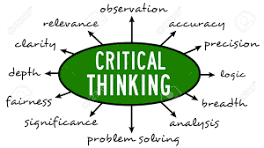
What Are Critical Thinking Skills?

Critical thinking skills are essential for making smart decisions, solving problems, and understanding the world around you. Whether you’re choosing classes, evaluating information online, completing a school project, or preparing for a future career, critical thinking helps you analyze information objectively, evaluate evidence, and make reasoned decisions. It allows you to separate fact from opinion and logic from assumption.
According to the World Economic Forum, analytical and critical thinking consistently rank among the most in-demand skills for the future workforce. That means developing these skills now can have a lasting impact on your academic success, career opportunities, leadership potential, and personal growth.
The American Psychological Association defines critical thinking as purposeful, reasoned, and goal-directed thinking. In simple terms, it’s thinking about your thinking—taking the time to question information, consider different perspectives, and make thoughtful decisions instead of reacting impulsively.
Why Critical Thinking Skills Matter

Whether you’re choosing classes, completing a science project, deciding how to solve a math problem, or exploring future careers, critical thinking helps you make better choices. Developing this skill now can prepare you for high school, college, technical training, and nearly every career field.
1. Better Decision-Making
Strong critical thinkers:
- Weigh evidence before acting
- Recognize emotional bias
- Consider alternative viewpoints
- Anticipate consequences
This leads to smarter personal and professional decisions
2. Career Advancement

Employers value professionals who can:
- Analyze complex problems
- Make independent judgments
- Avoid costly mistakes
- Provide strategic insight
Employers consistently rank critical thinking among the most valuable workplace skills because it helps employees solve problems independently, make informed decisions, and adapt to changing situations.
3. Protection Against Misinformation
In the digital age, information spreads rapidly. Critical thinking helps you:
- Evaluate sources
- Spot logical fallacies
- Identify misleading claims
- Avoid manipulation
This skill is essential for informed citizenship and responsible leadership.
Thinking critically also means understanding how to interpret career assessment results. Rather than accepting results at face value, learn how to use them wisely in our article Career Assessments: What They Tell You—and What They Don’t.
Core Components of Critical Thinking
1. Analysis

Breaking information into parts to understand structure and relationships.
Example: Reviewing data trends before launching a new product.
2. Evaluation
Assessing credibility and reliability of sources.
Ask:
- Is the source reputable?
- Is there evidence?
- Are there hidden assumptions?
3. Inference
Drawing logical conclusions based on available evidence.
4. Interpretation
Understanding the meaning of data, statements, or events.
5. Reflection
Examining your own thought processes and biases.
How to Improve Critical Thinking Skills
1. Ask Better Questions

Instead of accepting information, ask:
- What evidence supports this?
- What assumptions are being made?
- What’s missing?
2. Challenge Your Own Bias
Everyone has biases based on their experiences, beliefs, and emotions. Critical thinkers recognize these biases and intentionally consider evidence that challenges their assumptions. Being willing to change your opinion when presented with credible information is a sign of strong critical thinking—not weakness.
3. Practice Active Reading
When reading books or articles:
- Highlight key claims
- Look for supporting data
- Identify logical fallacies
4. Engage in Debate
Respectful discussions expose you to alternative viewpoints and sharpen reasoning.
5. Use Structured Frameworks
Tools like:
…help organize thinking logically.
Critical Thinking Mistakes to Avoid
Common Mistakes
- Accepting information without verifying it
- Letting emotions drive every decision
- Ignoring evidence that disagrees with your opinion
- Assuming the first solution is the best one
- Rushing decisions without enough information
One way to strengthen your critical thinking is by understanding how you learn best. Before taking the self-assessment below, you may find it helpful to read Why Understanding Your Learning Style Matters for Career Exploration.
How Strong Are Your Critical Thinking Skills?

👉Take the Critical Thinking Self-Assessment Quiz
How did you score? Share your results in the comments and identify one critical thinking habit you would like to strengthen this month.
Continue Your Career Journey
Critical thinking is more than just an academic skill—it’s a lifelong tool that helps you make better decisions, solve problems, and navigate an increasingly complex world. Whether you’re choosing your next class, evaluating career options, or making important life decisions, strong critical thinking skills will help you approach challenges with confidence. The more you practice asking questions, evaluating evidence, and reflecting on your decisions, the stronger this skill will become. Continue exploring with these helpful resources: