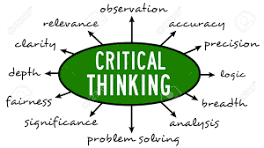
Critical thinking skills are essential, whether you’re making business decisions or solving complex problems. Critical thinking helps you separate fact from opinion and logic from assumption.
Logical reasoning includes:
- Analytical evaluation
- Reflection
- According to the World Economic Forum, analytical and critical thinking consistently rank among the most in-demand skills for the future workforce. That means mastering this ability can significantly impact your career, leadership potential, and personal growth. So, what does critical thinking involve?
- Critical thinking is the ability to objectively analyze information, evaluate evidence, and make reasoned decisions.
- It involves:
- (in a healthy way)
- Open-mindedness
- Problem-solving
The American Psychological Association defines critical thinking as purposeful, reasoned, and goal-directed thinking. In simple terms: it’s thinking about your thinking.
Why Critical Thinking Skills Matter
1. Better Decision-Making
Strong critical thinkers:
- Weigh evidence before acting
- Recognize emotional bias
- Consider alternative viewpoints
- Anticipate consequences
This leads to smarter personal and professional decisions
2. Career Advancement
Employers value professionals who can:
- Analyze complex problems
- Make independent judgments
- Avoid costly mistakes
- Provide strategic insight
Publications like Harvard Business Review frequently highlight critical thinking as a defining leadership trait.
3. Protection Against Misinformation
In the digital age, information spreads rapidly. Critical thinking helps you:
- Evaluate sources
- Spot logical fallacies
- Identify misleading claims
- Avoid manipulation
This skill is essential for informed citizenship and responsible leadership.
Core Components of Critical Thinking
1. Analysis
Breaking information into parts to understand structure and relationships.
Example: Reviewing data trends before launching a new product.
2. Evaluation
Assessing credibility and reliability of sources.
Ask:
- Is the source reputable?
- Is there evidence?
- Are there hidden assumptions?
3. Inference
Drawing logical conclusions based on available evidence.
4. Interpretation
Understanding the meaning of data, statements, or events.
5. Reflection
Examining your own thought processes and biases.
How to Improve Critical Thinking Skills
1. Ask Better Questions
Instead of accepting information, ask:
- What evidence supports this?
- What assumptions are being made?
- What’s missing?
2. Challenge Your Own Bias
We all have cognitive biases. Becoming aware of them strengthens objectivity.
3. Practice Active Reading
When reading books or articles:
- Highlight key claims
- Look for supporting data
- Identify logical fallacies
4. Engage in Debate
Respectful discussions expose you to alternative viewpoints and sharpen reasoning.
5. Use Structured Frameworks
Tools like:
- SWOT analysis
- The “5 Whys” method
- Decision matrices
…help organize thinking logically.
Leave a comment and let me know how important you think critical thinking is for success.
Leave a Reply